
(215) 545-4024
255 S. 17th Street, Suite 2507, Philadelphia, PA 19103
Monday- Friday
8:00 am- 5:00 pm.
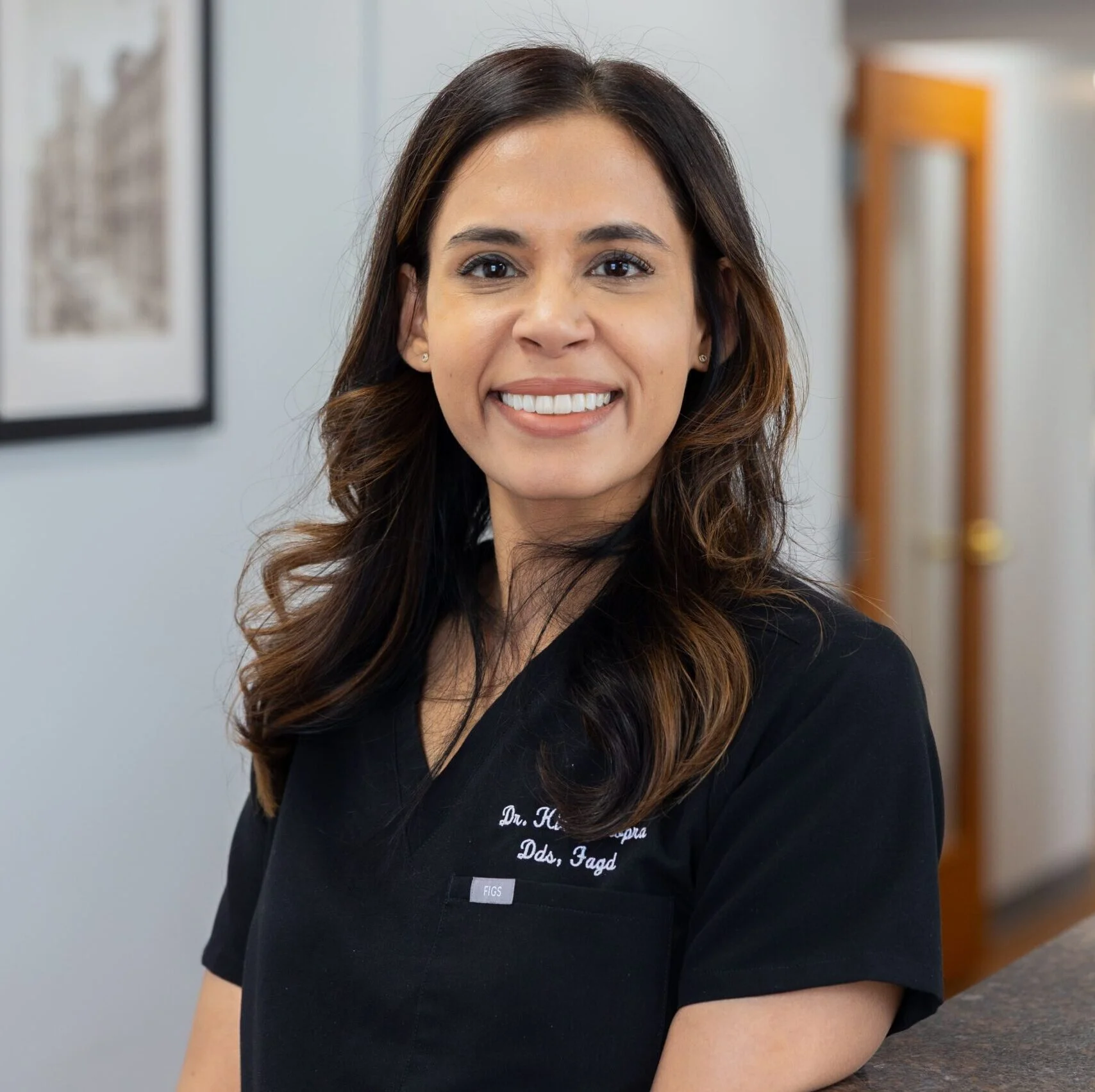
By Dr. Kirti Chopra, DDS, FAGD — General dentist, Smile Design Studio by KC, Rittenhouse Square, Center City Philadelphia · Kois Center Graduate with Honors.
A complex case is not defined by how many teeth are involved; it is defined by how many systems interact: the bite, the remaining tooth structure, the gum and bone support, and the patient’s own goals, all at once. Kois Center training is built around diagnosing those systems together rather than one at a time, which is why colleagues refer complex cases to Dr. Kirti Chopra, DDS: worn teeth, failing restorations, bite problems, and esthetic concerns that need one coordinated plan.
A single crown rarely requires a second opinion. A mouth where worn teeth, a shifting bite, and several aging restorations are all happening together is a different kind of problem, because treating any one piece in isolation leaves the others unaddressed. This piece looks at what actually makes a case complex, and what a structured diagnostic framework changes about how that kind of case gets planned.
“Complex” is a word used loosely in dentistry, so it is worth being precise about what it means in practice.
The American College of Prosthodontists publishes a diagnostic classification system for the completely dentate patient. It defines four classes, from Class I, an uncomplicated clinical situation, to Class IV, the most complex, with each class differentiated by specific diagnostic criteria. It was designed to support systematic diagnosis and to simplify the decision-making that comes with referral (McGarry et al., Classification system for the completely dentate patient, Journal of Prosthodontics, 2004).
That is the practical definition worth remembering: a case is complex because of how its findings interact, not because of how many teeth are involved. Restoring a worn tooth without addressing what is wearing it is a different decision from restoring one in isolation, because restorations, including those considered definitive, can have a limited lifetime when grinding or acid erosion continues (Loomans & Opdam, A guide to managing tooth wear: the Radboud philosophy, British Dental Journal, 2018).
The Kois Center’s postgraduate curriculum is organized around comprehensive diagnosis, occlusion, risk assessment, and treatment sequencing. Graduating with honors requires passing the Center’s separate honors examination. Dr. Chopra is a Kois Center Graduate with Honors, 2024. The full list of her credentials is on her Training and Credentials page.
A structured way of working through occlusion, risk assessment, and treatment sequencing matters most exactly where a case gets compounding: more than one factor happening at once. That kind of framework is what turns “several things are wrong” into an ordered plan, rather than a list of separate procedures competing for priority, and it is the specific reason a compounding case is a sequencing problem before it is a procedural one.
Colleagues refer complex cases to Dr. Chopra: worn teeth, failing restorations, bite problems, and esthetic concerns that need one coordinated plan. What she does with those cases is evaluate the findings together and sequence the treatment: what has to happen first, what can wait, and what one stage of treatment does to the stage that follows it.
Every case starts with the same full evaluation of the teeth, gums, bite, and airway, and an iTero scan is taken at every new-patient exam, so the plan is built from a complete record rather than from the one tooth that prompted the visit.
The findings are then sorted by what is causing what, because the cause is what decides the order of treatment. A worn edge, a failing crown, and a bite that no longer meets evenly may all trace back to the same source, and a plan that addresses that source first is a different plan from one that follows the most visible complaint.
Straightforward case | Complex case |
One tooth or one finding needs treatment | Multiple findings interact (bite, wear, restorations, esthetics) |
Sequencing has one obvious order | The order of treatment changes the outcome |
A single procedure resolves the concern | A plan spans several stages, sometimes months |
Where a case involves several of these compounding factors at once, treating it as one coordinated plan rather than a series of separate procedures is what full mouth rehabilitation is built for. Not every complex case needs that scope of treatment, but understanding the diagnostic picture first is what determines whether it does.
What makes a dental case “complex” rather than routine?
Complexity comes from how many systems interact at once: the bite, tooth and restoration condition, gum and bone support, and esthetics, rather than the number of teeth involved. A recognized classification system separates cases into four classes, from uncomplicated to most complex, using specific diagnostic criteria (McGarry et al., Classification system for the completely dentate patient, Journal of Prosthodontics, 2004).
What does Kois Center Graduate with Honors mean?
It means completing the Kois Center’s postgraduate curriculum in comprehensive diagnosis, occlusion, risk assessment, and treatment sequencing, and passing the Center’s separate honors examination. Dr. Chopra is a Kois Center Graduate with Honors, 2024.
What kinds of cases are referred to Dr. Chopra?
Worn teeth, failing restorations, bite problems, and esthetic concerns that need one coordinated plan. The question in these cases is usually sequencing, not any single procedure.
What happens at the first visit for a complex case?
It is the same new-patient exam every patient receives: the teeth, gums, bite, and airway are evaluated together, and an iTero scan is taken. Treatment is not proposed until those findings have been reviewed together, and the plan is then sequenced from them.
Is a complex case always treated as full mouth rehabilitation?
No. Some complex cases are resolved with a more limited, staged plan. Full mouth rehabilitation applies specifically when enough compounding factors are present that treating them as one coordinated plan produces a more stable result than treating them separately.
Can a patient ask directly whether their case is being treated as “complex”?
Yes. Asking how many factors the treatment plan is accounting for, and why the treatment is sequenced the way it is, is a reasonable question at any consultation. A plan built around one visible complaint and a plan built around several compounding factors should sound different when explained.
A complex case is defined by how many findings interact, not by how many teeth are involved, and the factors that make a case complex are the same factors a structured occlusal and diagnostic framework is built to sequence. That is the specific reason this kind of training is relevant to a case landing on Dr. Chopra’s schedule, not a general claim about experience or volume.
Dr. Kirti Chopra, DDS, FAGD is a general dentist at Smile Design Studio by KC in Rittenhouse Square, Center City Philadelphia. She is a Fellow of the Academy of General Dentistry, a Kois Center Graduate with Honors, an AACD Accreditation Candidate who has passed the written examination, and was inducted into Omicron Kappa Upsilon in 2018.
Know More About Dr Chopra
View Dr. Chopra’s Professional Profile
To find out whether your case would benefit from a coordinated treatment plan, schedule a consultation with Dr. Kirti Chopra, DDS, at Smile Design Studio by KC. Call 215-545-4024 or request an appointment online.
Kirti Chopra, DDS, FAGD, is a general dentist practicing cosmetic and restorative dentistry at Smile Design Studio by KC in Rittenhouse Square, Center City Philadelphia. She earned her DDS at the Indiana University School of Dentistry, where she was inducted into Omicron Kappa Upsilon. She is a Fellow of the Academy of General Dentistry, a Kois Center Graduate with Honors, and an AACD Accreditation Candidate, having passed the written examination.
(215) 545-4024
255 S. 17th Street, Suite 2507, Philadelphia, PA 19103
Monday- Friday
8:00 am- 5:00 pm.
© 2026 Kirtichopra. All Rights Reserved.


