
(215) 545-4024
255 S. 17th Street, Suite 2507, Philadelphia, PA 19103
Monday- Friday
8:00 am- 5:00 pm.
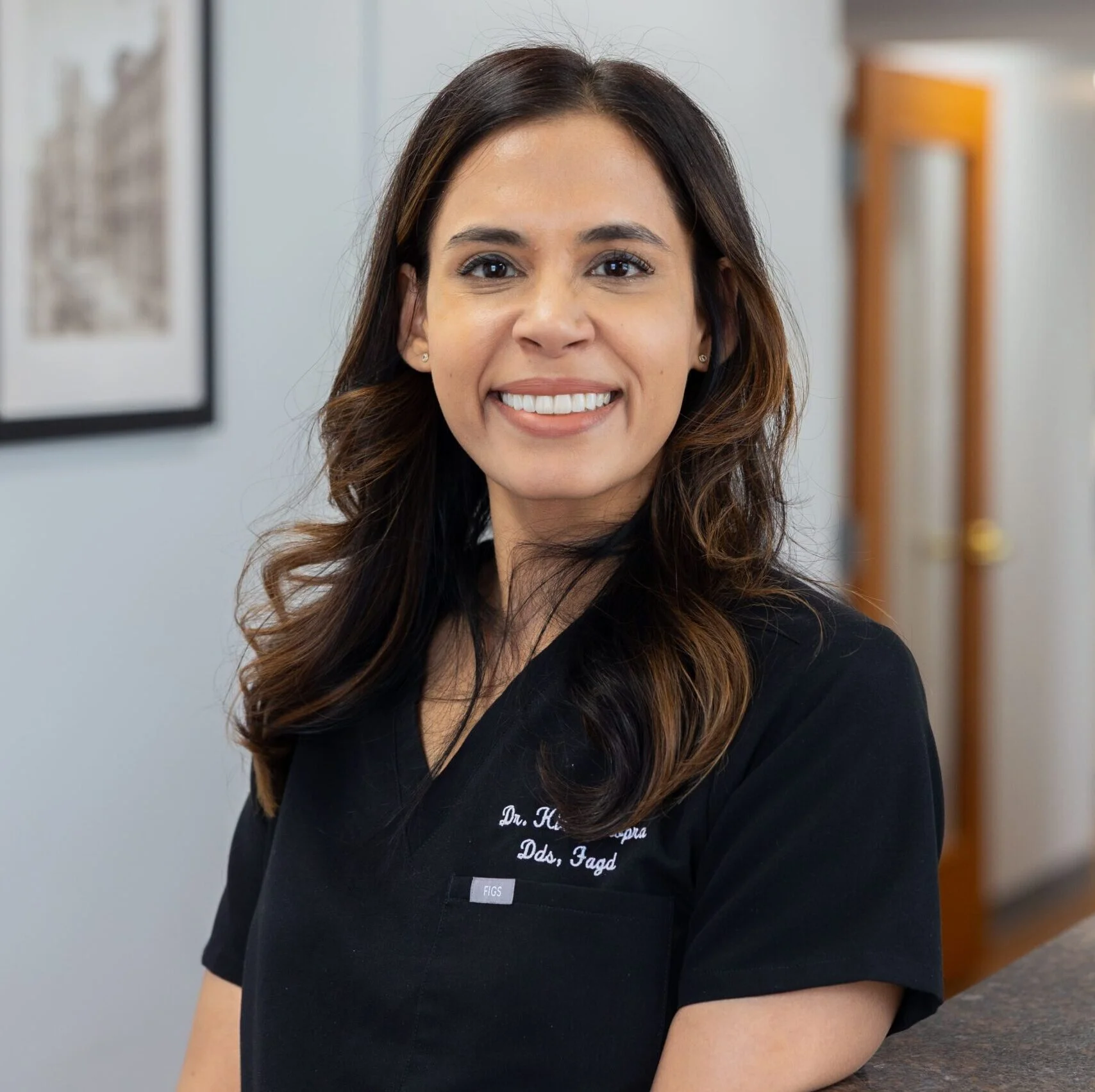
By Kirti Chopra, DDS, FAGD — General dentist, Smile Design Studio by KC, Rittenhouse Square, Center City Philadelphia · Kois Center Graduate with Honors
Airway screening at the dentist is a set of questions and observations, not a test and not a diagnosis. Following the American Dental Association’s policy, Dr. Chopra asks about symptoms such as snoring, daytime sleepiness, choking, and witnessed pauses in breathing, notes risk factors such as obesity, a recessed lower jaw, and high blood pressure, and refers the patient to a physician if risk is identified. Diagnosis belongs to a physician. Airway screening is part of every new-patient exam at Smile Design Studio by KC, and more about airway health at the practice is on its service page.
Most patients do not expect a dentist to ask about sleep. They come in about a tooth, a smile, or a cleaning, and a question about snoring can seem out of place. The American Dental Association (ADA), however, describes dentists as well positioned to identify patients at greater risk of sleep-related breathing disorders (American Dental Association, Policy Statement on the Role of Dentistry in the Treatment of Sleep Related Breathing Disorders, 2017, amended 2019). This guide explains what my airway screening involves, what it cannot do, and what happens if it raises a question.
The American Dental Association’s policy statement encourages dentists to screen patients for sleep-related breathing disorders as part of a comprehensive medical and dental history, to recognize symptoms such as daytime sleepiness, choking, snoring, or witnessed pauses in breathing, and to evaluate risk factors such as obesity, a recessed lower jaw, or high blood pressure.
If risk is determined, the policy says patients should be referred, as needed, to the appropriate physicians for proper diagnosis (American Dental Association, Policy Statement on the Role of Dentistry in the Treatment of Sleep Related Breathing Disorders, 2017, amended 2019). That is the scope of airway screening: ask, observe, and refer when there is a reason to.
My new-patient comprehensive exam evaluates the teeth, gums, bite, and airway together, and the airway part follows the ADA’s framework. I ask about snoring, daytime sleepiness, choking, and pauses in breathing that someone else has noticed, and I note risk factors such as obesity, a recessed lower jaw, and high blood pressure. None of these is a conclusion on its own. They are the questions that tell me whether a conversation with a physician is worth suggesting.
Screening is not diagnosis, and the guidelines are clear about that boundary. The American Academy of Sleep Medicine’s guideline states that diagnostic testing for obstructive sleep apnea should be performed in conjunction with a comprehensive sleep evaluation, and makes a strong recommendation that clinical tools, questionnaires, and prediction algorithms not be used to diagnose it in adults in the absence of formal sleep testing (Kapur et al., Clinical Practice Guideline for Diagnostic Testing for Adult Obstructive Sleep Apnea, Journal of Clinical Sleep Medicine, 2017).
I do not diagnose sleep-related breathing disorders from a dental chair, and I do not suggest that a patient has one on the basis of a few questions. A screening can raise a question. A physician answers it.
If the screening suggests risk, the next step is a referral to a physician, as the ADA policy describes. The physician decides what evaluation is needed and what, if anything, follows. I have written about this boundary more broadly in what a dental exam can and cannot tell you about your health, where the same idea applies: a dental exam can be a reason to see a physician, and it is not a diagnosis. Not every screening leads to a referral.
Obstructive sleep apnea is common. The American Heart Association’s 2021 scientific statement on sleep apnea and heart disease reports that about 34% of middle-aged men and 17% of middle-aged women meet the diagnostic criteria for it, and notes that it is often underrecognized and undertreated in cardiovascular practice (Yeghiazarians et al., Obstructive Sleep Apnea and Cardiovascular Disease: A Scientific Statement From the American Heart Association, Circulation, 2021). A few questions at a dental visit cannot tell anyone whether they have it, but they can start a conversation with a physician that might not otherwise happen. My exam is built around four parts that are read together (teeth, gums, bite, and airway), and the airway questions are part of that conversation, not a separate test.
What airway screening involves | What it does not involve |
Questions about snoring, sleepiness, choking, and pauses in breathing | A diagnosis or a test result |
Noting risk factors such as obesity, a recessed lower jaw, and high blood pressure | Telling a patient they have a sleep disorder |
A referral to a physician when risk is identified | Treating a sleep-related breathing disorder without a physician’s evaluation |
Is airway screening a test for sleep apnea?
No. It is a set of questions and observations. Obstructive sleep apnea is diagnosed by a physician after a comprehensive sleep evaluation and formal sleep testing.
What do you ask during airway screening?
I ask about snoring, daytime sleepiness, choking, and pauses in breathing that others have noticed, and I note risk factors such as obesity, a recessed lower jaw, and high blood pressure.
Does screening mean I have a problem?
No. A screening raises a question or it does not. If it does, the next step is a conversation with a physician, who decides what evaluation is needed.
Will I be referred to a physician?
Only if the screening identifies risk. Many patients are not referred. When a patient is, the referral is to a physician for diagnosis.
Is airway screening part of every new-patient exam?
Yes. Every new-patient exam at Smile Design Studio by KC covers the teeth, gums, bite, and airway, regardless of what brought you in.
Why is a dentist asking about my sleep?
Because the American Dental Association encourages dentists to screen as part of a comprehensive medical and dental history, and describes dentists as well positioned to identify patients at greater risk of sleep-related breathing disorders.
Can a questionnaire diagnose sleep apnea?
No. The American Academy of Sleep Medicine recommends against using clinical tools, questionnaires, or prediction algorithms to diagnose obstructive sleep apnea in adults without formal sleep testing.
To schedule an exam with me at Smile Design Studio by KC, call 215-545-4024 or request an appointment online.
Dr. Kirti Chopra, DDS, FAGD, is a general dentist and the owner of Smile Design Studio by KC in Rittenhouse Square, Center City Philadelphia. She earned her DDS from Indiana University School of Dentistry, where she was inducted into Omicron Kappa Upsilon, the national dental honor society, in 2018. She is a Fellow of the Academy of General Dentistry, a Kois Center Graduate with Honors, and an AACD Accreditation Candidate, written examination passed. She completed Bioclear Method training at the Bioclear Learning Center.
About Dr. Kirti Chopra at Smile Design Studio by KC · About Dr. Kirti Chopra on kirtichopra.com
Kirti Chopra, DDS, FAGD, is a general dentist practicing cosmetic and restorative dentistry at Smile Design Studio by KC in Rittenhouse Square, Center City Philadelphia. She earned her DDS at the Indiana University School of Dentistry, where she was inducted into Omicron Kappa Upsilon. She is a Fellow of the Academy of General Dentistry, a Kois Center Graduate with Honors, and an AACD Accreditation Candidate, having passed the written examination.
(215) 545-4024
255 S. 17th Street, Suite 2507, Philadelphia, PA 19103
Monday- Friday
8:00 am- 5:00 pm.
© 2026 Kirtichopra. All Rights Reserved.


